 Chris Knight
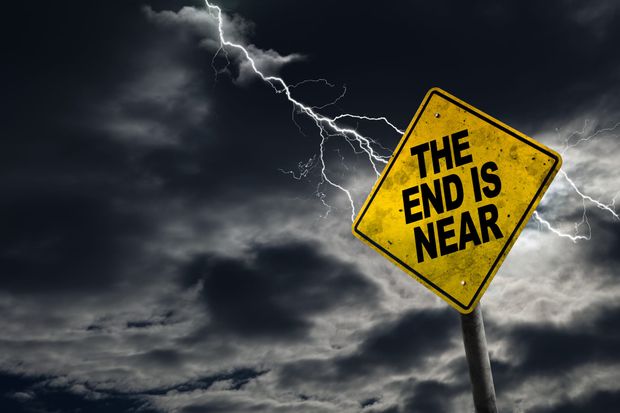
It is hard to watch the news without occasionally wondering, “Is Jesus coming back before I finish paying off the house?” Floods, fires, earthquakes, hail, wars, disease outbreaks and other disasters seem to fill our screens constantly. The word “apocalyptic” gets thrown around so often that it has practically become a weather-related term.
Jesus did tell His disciples that history would move toward a conclusion. He spoke of wars, famines, earthquakes, persecution and increasing turmoil. Yet He also gave an important warning: “Don’t panic. Yes, these things must take place, but the end won’t follow immediately” (Matthew 24:6, NLT).
That last sentence matters.
Some of what we are witnessing certainly sounds like the conditions Jesus described. Severe weather and costly disasters have increased in several categories and regions. At the same time, we should be careful about assuming that every natural disaster represents a measurable increase in biblical “signs.” For example, the U.S. Geological Survey says the apparent increase in recorded earthquakes is largely because we have far more instruments detecting them and much faster worldwide reporting. Major earthquakes themselves have continued to fluctuate around a long-term average. (United States Geological Survey)
In other words, our phones now allow us to know about an earthquake in Indonesia, flooding in Europe and a wildfire in California before breakfast. Previous generations simply did not have that kind of information.
Could the Rapture be next on God’s calendar? Absolutely. Paul teaches that believers will someday be “caught up in the clouds to meet the Lord in the air” (1 Thessalonians 4:16–17, NLT). Christians disagree about exactly where that event fits into the end-times timeline, but Scripture is unmistakably clear about something more important: Jesus is coming again.
The Missionary Church affirms that Christ’s return will be personal, bodily, visible and glorious, and describes His coming as a hope for which Christians should remain constantly prepared. (The Missionary Church)
Jesus also made something else very clear: “No one knows the day or hour” (Matthew 24:36, NLT). Every generation that has attempted to circle a date on the prophetic calendar has eventually needed a new calendar.
That means our focus should not be on trying to crack the code. No matter what wars, rumors of wars, disasters or frightening headlines surround us, our mission remains the same. Jesus gave us a much more reliable focus when He said, “And the Good News about the Kingdom will be preached throughout the whole world, so that all nations will hear it; and then the end will come” (Matthew 24:14, NLT).
That changes the emphasis. Jesus did not tell us to spend our lives staring at the sky or analyzing every headline. He told us to proclaim the gospel, make disciples, live holy lives, love people and remain faithful.
So I would be cautious about saying, “This earthquake proves the Rapture is next.” I would rather say, “Everything happening around us reminds me that this world is temporary, Jesus is coming again and I have work to do until He comes.”
The purpose of biblical prophecy is not to turn Christians into end-times detectives. It is to make us faithful disciples.
The better question is not, “Is Jesus coming soon?” The better question is, “If He came today, would I be ready to meet Him and am I faithfully doing what He told me to do until He comes?”